
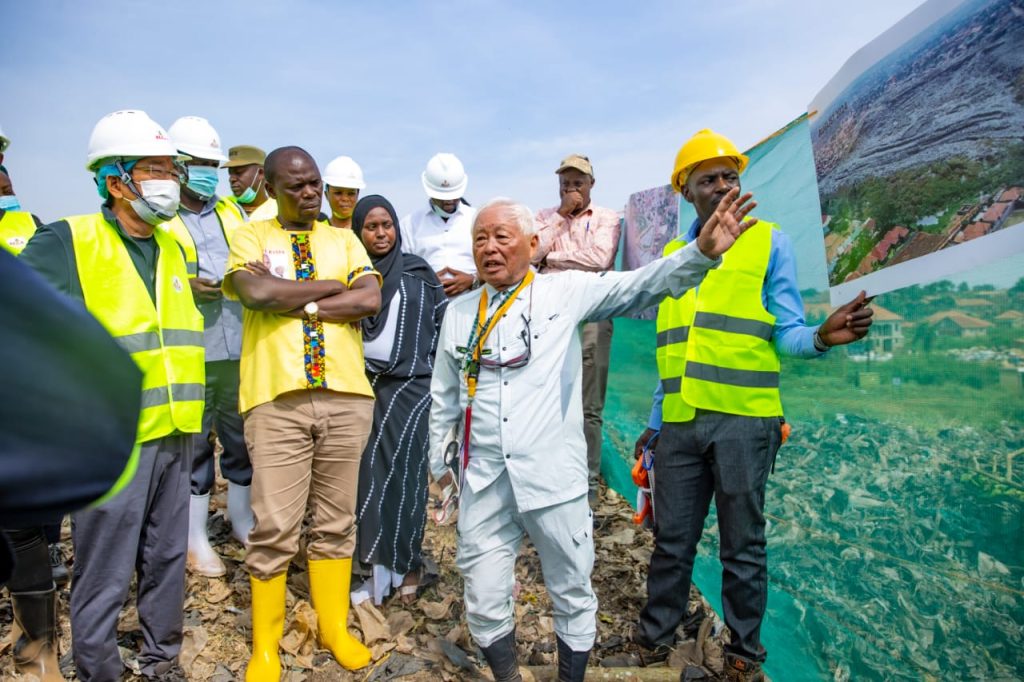
Kampala Capital City Authority (KCCA), working jointly with UN-Habitat, has started major rehabilitation works at the Kiteezi landfill, launching a $1 million (about UGX 4 billion) project funded by Japan to make the site safer and more stable.
The new intervention comes after the landfill’s partial collapse in August 2024, which left nearby residents exposed to pollution and serious health risks. The Japanese government approved the funding after KCCA and UN-Habitat submitted a joint request following the incident.
The initiative, titled Emergency Technical Assistance to Rehabilitate Kiteezi Landfill, will focus on decommissioning 7 acres—around 250,000 cubic metres of waste—using the Japanese-developed Fukuoka method, a system designed to stabilise old landfills and reduce methane emissions.
Japan’s ambassador to Uganda, Takuya Sasayama, said his country was committed to helping address Kampala’s waste problems and urged families to change their waste habits. “We face waste every day, and every household must take responsibility,” Sasayama said.
The works underway include reshaping dangerous slopes, strengthening the waste mass, installing methane-ventilation systems and constructing leachate-treatment ponds. KCCA staff will also receive training on landfill-risk management to support long-term prevention efforts. 

The technical operations are being guided by Japanese landfill engineer Prof. Masafumi Fujii, whom officials described as one of Japan’s top specialists in landfill management.
State Minister for Kampala Capital City and Metropolitan Affairs Kabuye Kyofatogabye said the ongoing works will help avert future slides. He added that compensation for residents affected by last year’s collapse will be released soon.
UN-Habitat’s Regional Human Settlements Officer for Africa, Grace Lubale, said the project highlights the importance of international cooperation in safeguarding vulnerable communities. She said UN-Habitat will continue providing technical support for the planned new waste facility in Buyala.
Speaking on behalf of the KCCA Executive Director, Director Revenue Nowere noted that although the grant marks a strong beginning, more support will be needed to rehabilitate the remaining 30 acres. “This grant gives us a critical start,” she said.
Local leaders, including Lusanja LCI Chairperson Kibuka, welcomed the project and expressed gratitude to Japan for responding to community concerns.
KCCA’s Director for Public Health and Environment, Sarah Zalwango, encouraged residents to support the city’s shift to better waste management by recycling, reducing household waste and keeping their surroundings clean.