
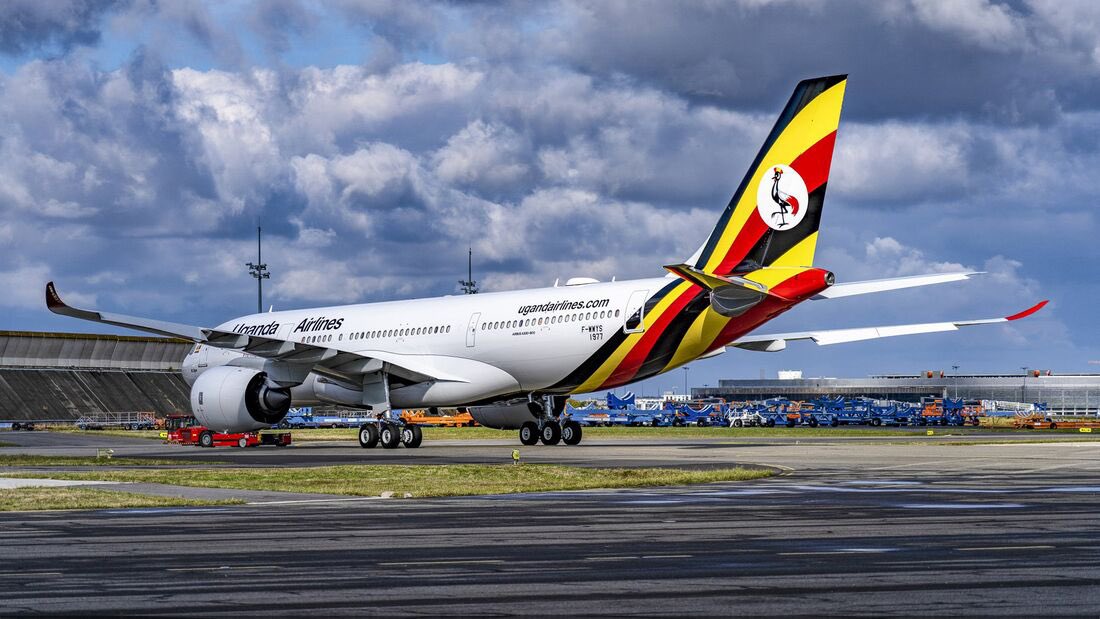
The Ministry of Works and Transport has requested a UGX 1.696 trillion supplementary budget, including UGX 422.264 billion as the initial payment for the purchase of 10 new aircraft for Uganda Airlines, igniting questions and debate in Parliament over the scale, timing, and management of the investment.
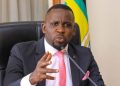
The proposal was presented to Parliament’s Budget Committee on 1st December 2025 by Gen. Edward Katumba Wamala, Minister of Works and Transport, ahead of the supplementary budget’s consideration in plenary.
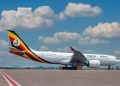
The aircraft order includes four mid-range Airbus jets, four wide-body Boeing planes, and two Boeing cargo freighters, signaling Uganda Airlines’ ambition to expand passenger and cargo services.
Gen. Katumba defended the supplementary budget, arguing that acquiring aircraft is a competitive process and requires early financial commitment to secure production slots.
“Uganda Airlines is in the process of acquiring 10 aircraft… The supplementary budget is to cater for the projected initial requirements for the aircraft purchase for this financial year 2025/2026,” he said.
“It includes pre-delivery payments at purchaser agreement signature amounting to UGX 247.019 billion and UGX 275.245 billion for payments due in January 2026 from both Boeing and Airbus.”
He emphasized the urgency:“We are buying just this, but when you look at companies like Qatar, they have made an order for 465 aircraft with Boeing. If you don’t pay for your slot, you’ll never get these aircraft,” Katumba said.
“The most important thing is to secure our slot now so that we know when to finish the payment.”
Some MPs questioned the prudence of purchasing 10 aircraft at once.
Otuke County MP Paul Omara cited past challenges with the Bombardier aircraft and sought guarantees on maintenance and operational sustainability.
“You remember the Bombardier we bought; later we discovered there were no spare parts, they were no longer in production. We want assurance that this procurement will have future support for these 10 aircraft,” Omara said.
Kira Municipality MP Ibrahim Ssemujju Nganda supported the idea of a national carrier but criticized the timing of the purchase.
“Since when did this become an emergency? Were these things part of the budget for the airline, or discovered along the way? You make Parliament look shabby over matters we shouldn’t quarrel about,” Ssemujju said.
Bugabula North MP Maurice Kibalya suggested a phased approach:
“I would suggest we begin with three aircraft in the first one or two years, then add gradually. But we are purchasing ten at once,” he said.
In response, Gen. Katumba defended the airline’s ability to manage the expanded fleet.
“Uganda Airlines right now manages 38% to 40% of traffic through Entebbe, but with the aircraft we have, we are overstretched,” he said.
“Sometimes aircraft have to wait for another arriving from a different route before they can operate again.”
Uganda Airlines CEO Jennifer Bamuturaki told Parliament that flight delays and cancellations are not due to poor management but are caused by external factors known as no-terms—sudden operational notices issued by civil aviation authorities that require immediate changes to flight schedules.
“These delays and cancellations are coming over a cocktail of a few things,” Bamuturaki explained.
“Airports may be doing cleanup, construction, or other maintenance. When you’re given a no-term, you have to change schedules, which causes delays.”
She added that in the last three weeks, Uganda Airlines faced no-terms at Entebbe, Bujumbura, Juba, and Dar es Salaam, affecting multiple flight schedules.