
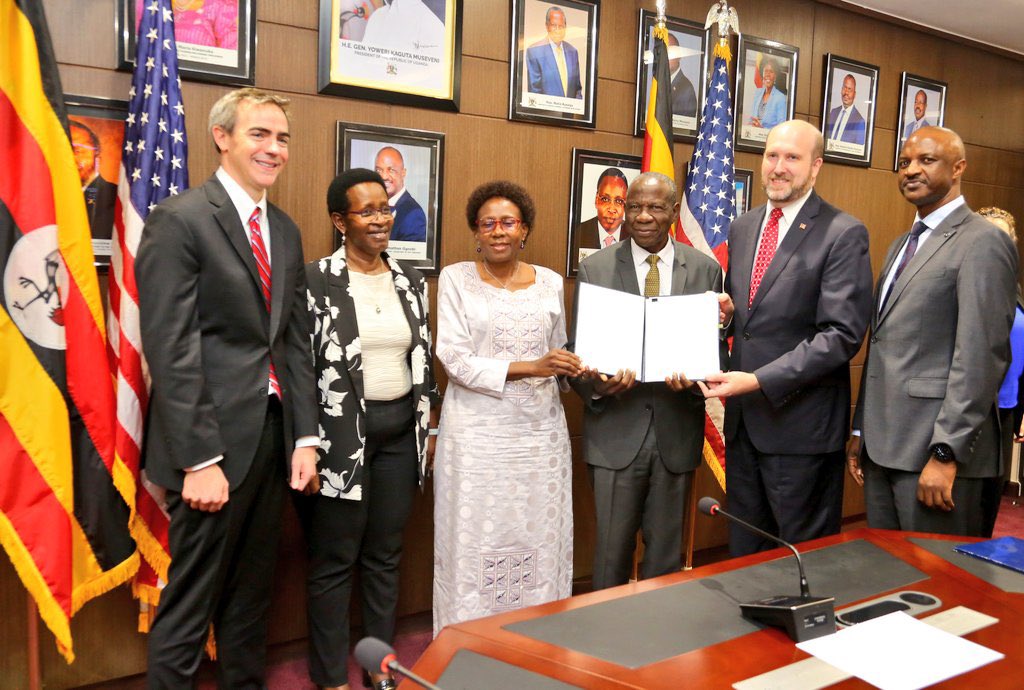
Uganda and the United States signed a five-year health cooperation framework worth UGX 8.7 trillion (USD 2.3 billion), a deal officials say will push the country toward stronger, more resilient and locally led health systems.
Under the new Memorandum of Understanding (MOU), the U.S. government will contribute USD 1.7 billion — about UGX 6.46 trillion, while Uganda has committed to raising an additional UGX 1.9 trillion (USD 500 million) in domestic health spending between 2026 and 2030.
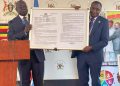
Finance Minister Matia Kasaija, who signed on behalf of Uganda, framed the arrangement as a major shift toward long-term sustainability.
“I am pleased to sign this Memorandum of Understanding,” Kasaija said. He added that the funding would support HIV, TB, malaria, maternal and child health and global health security. “We note the U.S. government’s commitment of $1.7 billion and commit to gradually increasing our own contribution.”
He called the agreement “another building block” in Washington’s long history of support to Uganda’s health sector.
U.S. Ambassador William Popp said the MOU fits within America’s evolving global health doctrine, which emphasizes accountability and strong local ownership.
“This clear and accountable arrangement outlines how our governments will support life-saving services, strengthen systems that protect both our countries, and ensure responsible use of American taxpayer dollars,” Popp said.
“Today, we have just signed a five-year and together $2.3 billion memorandum of understanding for health cooperation.”
Popp described the partnership as a “system shift,” moving Uganda away from parallel donor-funded structures toward government-led delivery. This includes transitioning thousands of community health workers from project-based funding to Uganda’s payroll. 
“More than 1,100 community health extension workers have already been trained, and this MOU will continue supporting training and equipment as Uganda assumes responsibility for salaries,” he noted.
Health Minister Dr. Jane Ruth Aceng said the agreement marks a decisive break from old aid models.
“This is a huge bilateral health investment, a vote of confidence in our national vision,” she said.
“Uganda’s sovereignty over its biological resources and health data is invaluable and non-negotiable.”
The pact will channel major investments into digital health systems, electronic medical records, disease surveillance, laboratories, supply chain management and emergency preparedness.
Uganda will also begin taking over procurement of HIV, TB and malaria commodities, while the U.S. maintains support to faith-based health providers and global health security programs.
Popp highlighted that Uganda has been central to U.S. global health efforts for decades, recalling that the first patient treated under PEPFAR worldwide was Ugandan.
“This framework enables Uganda to plan with certainty, set priorities and lead implementation,” he said.
Dr. Aceng said execution begins immediately.
“Today marks the beginning of five years of intense, focused and results-driven collaboration,” she said. “Let’s move from commitment to delivery.”
The Ministry of Health says implementation structures are already being aligned to ensure the partnership hits the ground running.