
Church leaders and environmental advocates have called on Ugandans to adopt more plant-based meals as a practical step toward protecting the environment, improving public health, and strengthening food security.
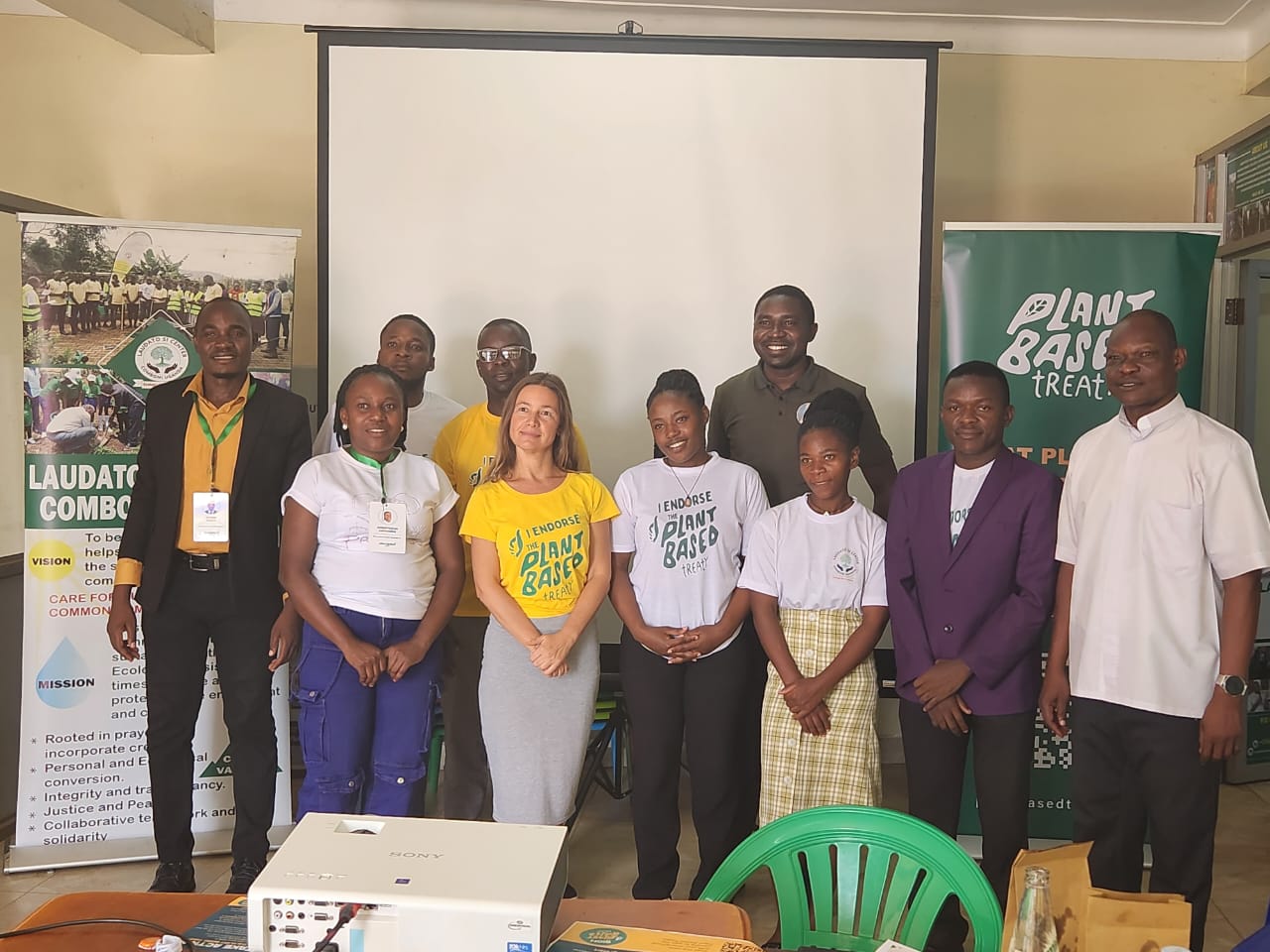
The call was made during an engagement held at Our Lady of Fatima Catholic Parish in Mbuya, Kampala, hosted by the Laudato Si Comboni Centre Uganda, where environmental enthusiasts from the Plant-Based Treaty Uganda Chapter met church leaders to promote sustainable food systems.
Speaking at the meeting, Moses Kalyango, the Plant-Based Treaty campaigner for the Uganda Chapter, said the Church remains a critical partner in influencing individual choices and national action on climate change.
“The Plant-Based Treaty is about collecting endorsements and calling upon individuals, businesses and cities to put pressure on national governments to endorse the treaty, which complements the Paris Agreement,” Kalyango said.
Kalyango urged Ugandans to rethink what they eat, arguing that food choices play a major role in the climate crisis.
“Plant-Based Treaty is about saving the climate through food systems. We are calling on people to move away from animal agriculture to plant-based farming because of what animal agriculture has done to our climate,” he said.
Welcoming the collaboration, Rev. Fr. John Kennedy Onoba, Executive Director of Laudato Si Comboni Centre Uganda, said the Church has a responsibility to guide believers toward choices that protect creation and human life.
“Uganda’s diet is very much animal-based, and advertising has made animal products more attractive than plant-based foods,” Fr. Onoba said.
He noted that after engaging with Plant-Based Treaty advocates, he better understood the environmental and health benefits of plant-based diets.
“This training helped me see the benefits of plant-based foods, not only on health but also on the environment. Once embraced, plant-based food systems contribute greatly to reducing carbon emissions,” he explained.
Fr. Onoba emphasized the importance of fruit trees in environmental protection.
“Fruit trees bring economic benefits, nutritional benefits and absorb carbon. They are rarely cut, and that makes their contribution to climate protection very high,” he said.
Addressing church leaders, Cindy Veltens, the Global Campaigner for Plant-Based Treaty Africa Region, said adopting plant-based meals is both an environmental and health solution.
“Plant-based food systems help reduce climate change, but they also address the health crisis we are facing,” Veltens said.
She explained that many non-communicable diseases are linked to diet.
“Diseases like diabetes, cancers, cardiovascular diseases and hypertension are lifestyle diseases. They are not caused by eating too many fruits and vegetables, but by excessive consumption of processed foods and animal products,” she said.
Veltens stressed that individuals have power through daily food choices.
“We all decide what is on our plate every day. That decision affects our health and the planet, and we want people to make informed choices,” she added.
Catherine Ayinebyona, a Plant-Based Treaty campaigner with the Uganda Chapter, said plant-based food systems are key to addressing food insecurity and malnutrition.
“In the past, our communities had granaries that ensured food during times of hunger. Their disappearance has contributed greatly to food insecurity,” Ayinebyona said.
She warned that animal-based foods pose safety risks.
“Most animal-based food products are processed with additives, hormones and antibiotics, which pose serious health threats,” she said, citing antibiotic resistance as a growing concern. “When people shift to plant-based food systems, they will not only be food secure but also consume healthy and nutritious food that helps solve malnutrition,” she added.
Environmental advocates and church leaders jointly called on Ugandans to take personal responsibility by adopting more plant-based meals in their daily diets, sharing knowledge within communities, and holding leaders accountable for food system decisions.
The Plant-Based Treaty is a global call to action promoting sustainable food systems through phasing out unsustainable animal agriculture, adopting healthy plant-based diets, and restoring ecosystems.
With faith institutions now adding their voices, campaigners believe the message will reach deeper into communities—linking care for creation, healthy living, and sustainable livelihoods.