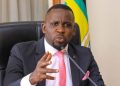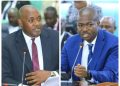

Ibrahim Ssemujju Nganda has conceded defeat in the Kira Municipality parliamentary race, formally ending his 15-year stint in Uganda’s Parliament and marking one of the most notable outcomes of the January 15, 2026 general elections.
Ssemujju lost the seat to National Unity Platform (NUP) candidate George Musisi, who secured a decisive victory in a contest that saw long-standing voting patterns in Kira shift, including in areas where Ssemujju had previously enjoyed strong support.
Addressing the outcome, Ssemujju said the results left no room for dispute and emphasized that conceding was the only honest response. “When I campaigned, I believed I would win. But when the results came out, I lost, and I conceded,” he said.
His acceptance of defeat stood out in an election cycle marked by disputes and legal challenges, with Ssemujju noting that while some opposition candidates were unfairly treated, his own loss reflected the clear choice of voters.
Ssemujju, who entered Parliament with the creation of Kira Municipality in 2016, has been a prominent opposition voice, often calling for a strong, informed, and principled legislature.
Commenting on the exit of several veteran opposition MPs in the same election, Ssemujju said their absence would be felt in the House.
“Parliament will miss us,” he remarked, referring to colleagues such as Mathias Mpuuga, Muwanga Kivumbi and Medard Lubega Ssegona.
He also raised concern over the reduced number of opposition MPs in the incoming Parliament, warning that fewer voices could weaken oversight and debate.
Despite losing his seat, Ssemujju said he remains committed to Uganda’s democratic struggle and will continue to speak out on national issues from outside Parliament.
“The people of Kira Municipality gave me 15 years of representation. Maybe they felt it was time for me to step aside,” he said.
As Parliament prepares for a new term, Ssemujju’s concession highlights a rare moment of political acceptance in a highly contested electoral season — underscoring the role of voter choice in shaping Uganda’s political future.