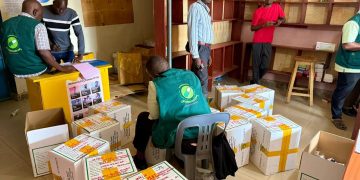

Uganda’s National Drug Authority (NDA) has shut down more than 105 illegal drug outlets and seized 260 boxes of assorted medicines worth about UGX 65 million during a week-long enforcement operation in the Teso sub-region.
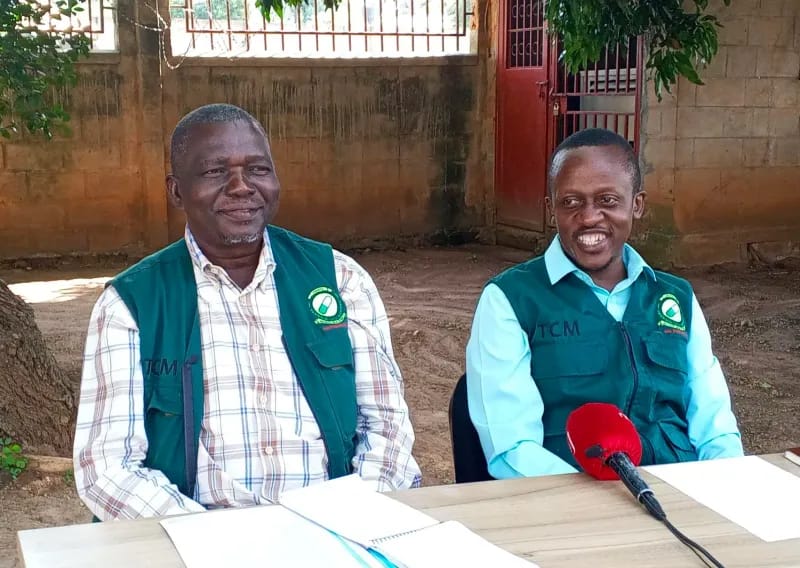
The crackdown was announced during a press briefing at the NDA regional offices in Soroti City, where officials said the operation targeted the districts of Kaberamaido, Ngora, Kalaki, Kapelabyong and Soroti.
Speaking at the briefing, Dr. Tom Makumbi, the Regional Inspector of Drugs for North Eastern Uganda, said the exercise was aimed at stopping the sale of medicines by unlicensed and unqualified dealers.
“The worst offender district was Kaberamaido, from which we retrieved 44 boxes of medicine from illegal outlets. Our operations are guided by surveillance and intelligence,” Dr. Makumbi said. “We are no longer running around like headless chickens; we plan carefully and act strategically.”
NDA said many of the closed outlets were operating without valid licenses, running from unauthorized premises, and in some cases managed by people who are not trained to handle medicines.
The authority warned that such illegal practices fuel the spread of counterfeit and substandard drugs, misuse of medicines, treatment failure and rising antimicrobial resistance, which remains a major public health threat in Uganda.
Dr. Makumbi explained that the goal of the operation is not to punish but to bring businesses into compliance.
“Our objective is to elicit compliance, not to send people to jail. We encourage operators to visit our Soroti regional office for guidance and to formalize their businesses,” he said.
He also revealed that compliance in the region is improving, noting that the number of licensed Class C drug shops has risen from 884 last year to 1,010.
“This shows that many outlets we previously closed have now met the required standards and are operating legally,” Dr. Makumbi added.
NDA said its enforcement activities are guided by risk assessment and intelligence, as the region has 19 districts, making it impossible to inspect all areas at once.
During the same briefing, Dr. Alfred Ayom Akali, a Senior Inspector of Drugs, warned the public against buying medicines from open markets such as Amukaru, Wera and Toroma.
“We urge the public to buy medicines only from licensed pharmacies and drug shops where the license and photo of the qualified person are clearly displayed,” Dr. Akali said. “Many people selling drugs in markets are not qualified, and the quality of those medicines cannot be guaranteed.”
NDA reaffirmed its commitment to ensuring that all Ugandans have access to safe, effective and quality medicines, including those in remote areas.
Dr. Makumbi noted that in hard-to-reach regions like Karamoja, the authority sometimes licenses unconventional structures, including traditional manyatas, as long as they meet basic standards and are run by qualified personnel.
The National Drug Authority regulates the manufacture, importation, distribution and sale of medicines in Uganda, and says its continued enforcement efforts are meant to protect the public from unsafe and illegal drugs.