
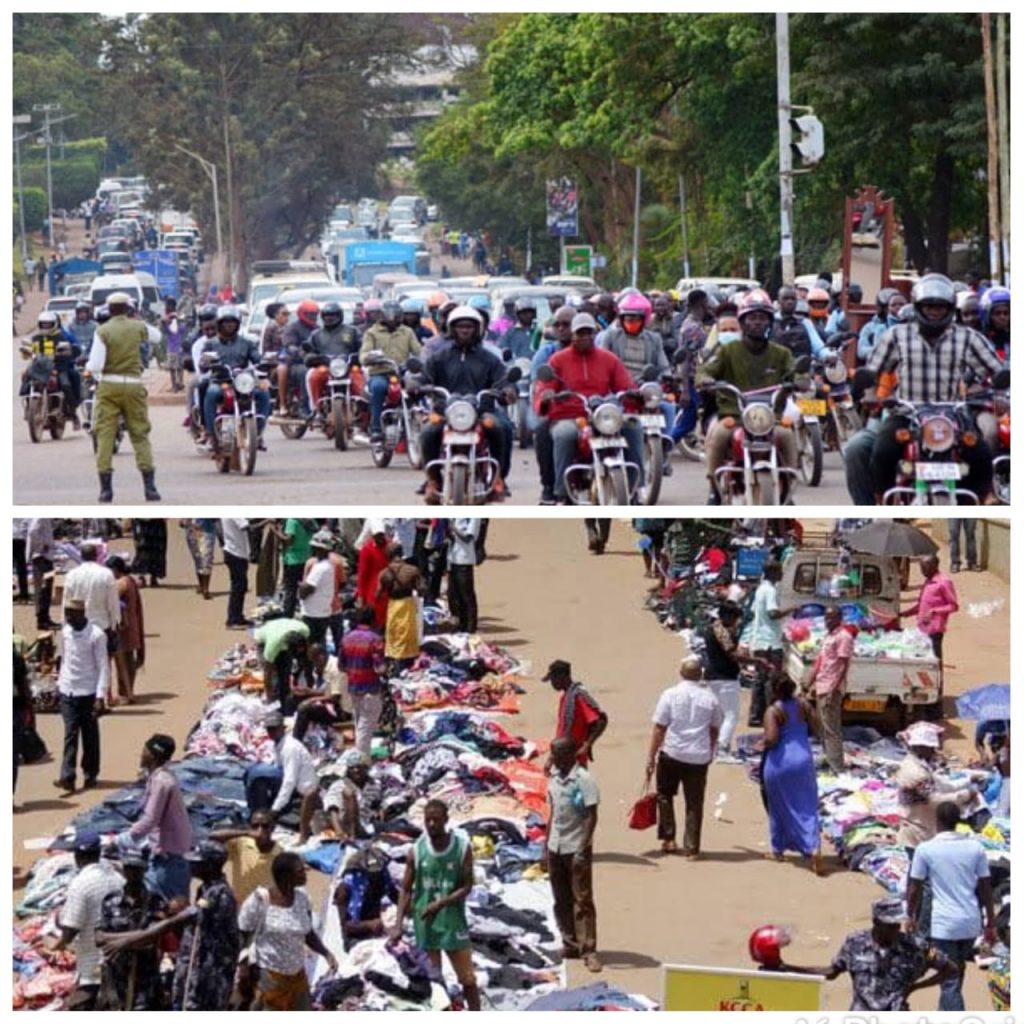
The Kampala Capital City Authority (KCCA) has announced a sweeping crackdown on street vending, illegal boda boda operations and unauthorised taxi stages as part of a renewed effort to decongest the Kampala Metropolitan Area.
The enforcement, which comes with a two-week grace period was announced by the Minister for Kampala Capital City and Metropolitan Affairs, Minsa Kabanda, who said the city has become increasingly choked by activities that violate urban regulations.
Kabanda said hawkers, roadside vendors and unregulated transport operators have encroached on pavements, drainage channels and road reserves, severely disrupting traffic flow, pedestrian movement and sanitation in the city.
“Kampala has become extremely congested because many people move from rural areas into the city during election periods and remain behind to engage in street vending along major roads,” Kabanda said during a press conference attended by leaders of vendor associations.
“This has made it difficult for KCCA to maintain order, hygiene and safety.”
She noted that for several years, KCCA and city leaders have tried — unsuccessfully — to remove vendors operating along key entry and exit routes into Kampala, describing the situation as one that can no longer be tolerated if the capital is to function properly.
KCCA statistics show that more than 30,000 street vendors and roadside traders currently operate in Kampala, yet only about 970 traders are accommodated in officially gazetted city markets, highlighting the scale of informal trading in the city.
The ban also targets illegal boda boda stages and taxis operating outside designated terminals, which KCCA says are a major contributor to traffic jams, accidents and lawlessness in the central business district and surrounding areas.
Kabanda say the timing of the enforcement is deliberate, coming at the end of the election cycle when political interference that often shields illegal activities is reduced.
“Now that the election period is over, we must restore order and make Kampala a city that works,” Kabanda said.
During the two-week grace period, KCCA will sensitise vendors, boda boda riders and taxi operators to vacate road reserves and move to designated areas. After that, full enforcement will begin, including arrests, impounding of motorcycles and confiscation of goods.
KCCA officials say they are also engaging market leaders and transport associations to explore ways of absorbing more traders and operators into regulated spaces, but insist that street trading and illegal stages will no longer be allowed.
The move is expected to face resistance from thousands of urban poor who depend on street vending and informal transport for survival, but authorities argue that restoring order, safety and cleanliness in Kampala is critical for the city’s economic and social future.